

Hello readers!
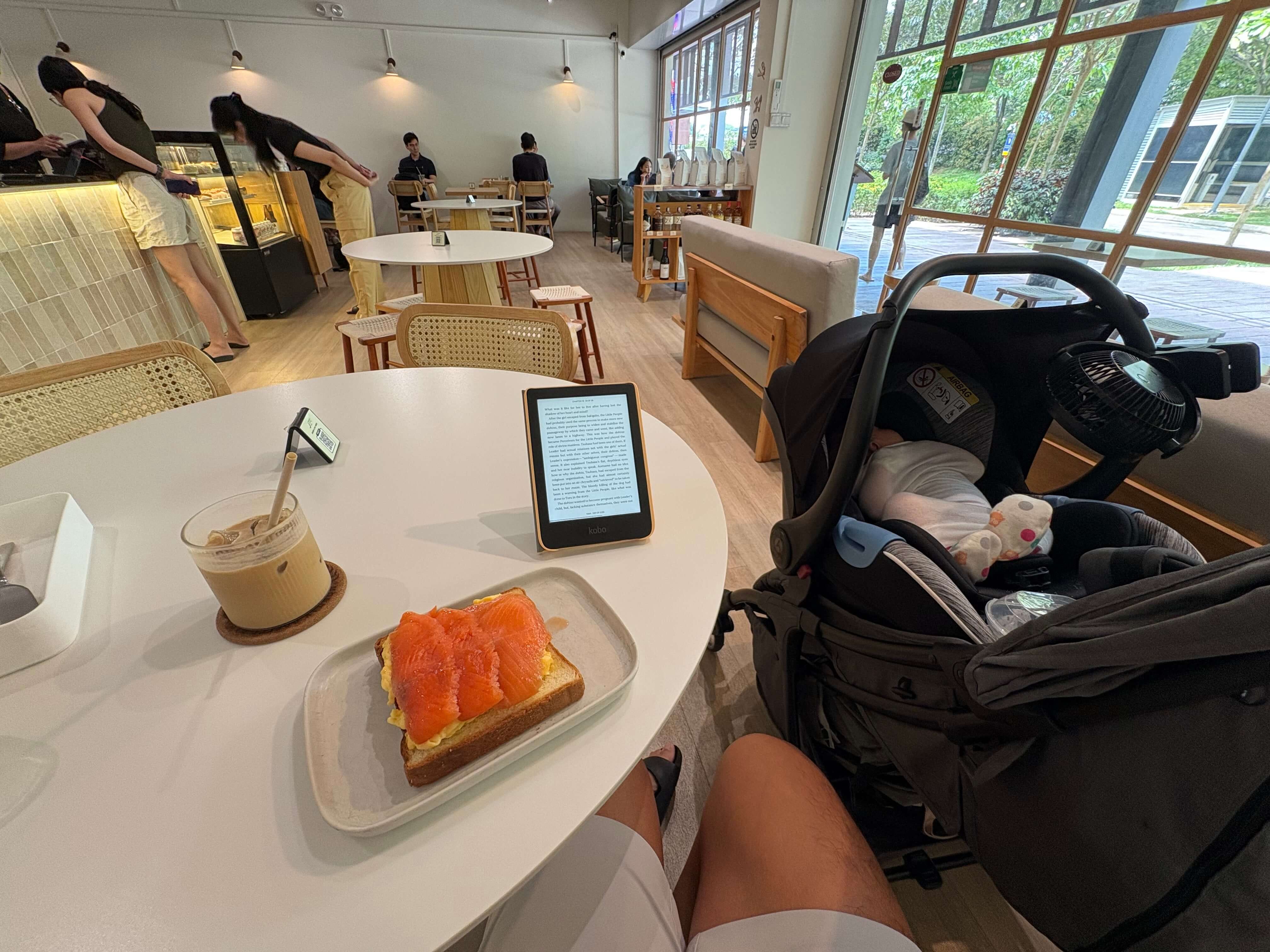
As I was reading Theo of Golden this week, I picked up a new term, “joie de vivre”. Wikipedia defines it as “joy of living” but I very much prefer the definition by my Kobo eReader:
Exuberant enjoyment of life!
I wish I had learned about this term last week, before I emailed you Get a life. A real life. But it is also relevant for this week’s topic:
Stepping away from social media, stepping back into life
I loved social media. Loved.
Back in 2013, I was a lost kid at the University of Warwick, constantly thinking about what to do in life. I was studying accounting and finance but didn’t want to work in financial institutions. At the same time, social media companies like Facebook, Twitter, and Snapchat were blowing up with millions of users. Even though I was in the middle of nowhere, they connected me to the world. My family back in Singapore could see how I was doing from thousands of miles away by looking at my Facebook profile. I also could interact with people working on interesting projects on Twitter. I loved social media so much that I eventually worked at Buffer, a social media management software company, for six years. I gained a lot from being active on social media, too: a job at a Silicon Valley startup, speaking opportunities, triathlon sponsorships, and more. At almost all local events I attended, someone would tell me they had seen my LinkedIn posts. Influencer, maybe?
But social media is no longer what it was meant to be. It is a lot less connecting and a lot more content. Clickbaity content. Controversial content. Mindless content. When my son was still a baby and I would carry him for his naps, I could watch YouTube Shorts for up to three hours. (My sleep-deprived brain wasn’t making the best decisions.) Besides wasting my time, this infinite comparison engine was making me unreasonably envious of others and upset at myself1. I know what I saw was only the highlights they wanted to show. But still. My attention span also caved. When I had a good chunk of time to read, I drifted towards tweets and short-form videos. Whenever I tried to write, I got pulled away by “research” on social media. The worst part? Social media force-feeds us content from faraway strangers whom we don’t care about and disconnects us from our loved ones who are right beside us.
What information consumes is rather obvious: it consumes the attention of its recipients. Hence a wealth of information creates a poverty of attention.
— Herbert A. Simon
I had previously deleted all the social media apps from my phone when my yima was in a critical condition. Because of what I was going through then, I didn’t want to know about other people’s lives. But I felt I couldn’t ignore social media for marketing if I wanted the fastest result. Pebblely grew to a million users in only seven months because of viral videos on TikTok. Later, when SK and I wanted to push Booplet, I brought back social media in full force, posting on both the brand and my personal accounts. Also, the most interesting AI projects are happening on Twitter, and not being there felt unprofessional.
But since I got the opportunity to rethink my life a few months ago, I decided enough was enough. I deleted the social media apps from my phone and haven’t touched them for about five months2. For my well-being, it has been great! I don’t instinctively take out my phone to scroll whenever I have a minute, such as waiting for the bus or queueing for food. Admittedly, I haven’t replaced it with healthier habits, such as reading a book, but I try to always have a book with me, as Ryan Holiday recommends. I do find reading newsletters during those pockets of time easier because they are shorter. I carefully curated my newsletter subscriptions, which currently include Craig Mod’s newsletters, Common Cog, Dense Discovery, and Kevin Kelly’s Substack. But sometimes I just do nothing. Perhaps stare at the clouds in the sky or muse about what to write next. And after missing out on the latest AI news and projects on Twitter for a few months, I realized I don’t need to know them as soon as they were published. In fact, I didn’t even need to know about most of them. I don’t get much fomo now. To still stay in the loop, I get slightly delayed but human-curated updates from folks like Simon Willison and Ben Evans. And, of course, using AI is more important than reading about it (which has a lot of noise!)
“It is surprising how much reading a man can do in time usually wasted.” — Theodore Roosevelt
While the pockets of time here and there add up, what matters more is how I spend the bulk of my time. The rocks in my jar. For that, I have been making heavy things. Not just things. But heavy things. I used to think the solution to my social media addiction was to create. Hey, I’m not just consuming content. I’m creating! But that’s just a cop-out. As Anu Atluru wrote, “No matter how many you stack, Tweets and TikToks don’t add up to something heavy.” I stopped churning out tweets and TikTok videos, which would fade by tomorrow, to feed The Algorithm. I switched to writing newsletters, building Fernsage, and parenting. Fernsage itself is an embodiment of that heaviness. I want to write down things so that I can refer to them for a long time. If I succeed, it might even be something I pass down to my children (assuming they want their dad’s good ol’ advice).
The biggest question I have yet to answer, though, is: Can I build my business without social media (especially since I have depended on it heavily in the past)? My honest answer is I don’t know yet, but I believe I can figure it out. I have been inspired by folks like Craig Mod, Robin Sloan, Herman Martinus, and Cal Newport, who have been making a living without depending on social media. Yes, growing a business without social media might take longer. But writing newsletters like this and commonplace pages like those below is more in line with what I want to keep doing in the long term.
Where do I get the source for all this content? My life. Like the advice Ryan Holiday got: “If you want to be a great writer, go live an interesting life.”
Joie de vivre!
From my commonplace book
An erroneous log in my Meimei app got me thinking about how to highlight such mistakes to the users (which are just my wife and me). Claude Code suggested an abstraction that sounded smart initially. But after some thought, I realized it was a harmful design.
Understanding meltdowns and tantrums (WIP note)
According to The Whole Brain-Child, we have a left (logical) and right (emotional) side of our brain. When a kid is emotional (e.g. “I don’t want to go to school!”, replying to them rationally (which is how we adults usually think) will make things worse (e.g. “everyone goes to school”). A possible solution is to connect emotionally first and then redirect them to what we want them to do.
I have been on a quest that every parent eventually thinks about: how to reduce meltdowns. I can’t say this solution has been perfect, but it does seem to work sometimes and feels much more loving (yet firm) than simply reprimanding.
My son is into Din Tai Fung’s Crispy Prawn Cake, so my wife and I got the EB Frozen Golden Crispy Prawn Cake to make at home. I got intrigued by the instruction to “cook from frozen”, and here’s what I learned.
(I’m also starting a recipes collection in my Fernsage. Please send me your favorite recipes for kids!)
Around the web
Patagonia’s Philosopher-King by Nick Paumgarten
Yvon Chouinard has been a huge inspiration for me. He was so deeply into climbing that he designed and made new climbing tools. That eventually turned into Chouinard Equipment, and then Patagonia. For example, when he was frustrated with European pitons, which cannot be removed from the wall, he made reusable pitons. Later, worried about degrading the rock, he made aluminum chocks that wouldn’t leave any gear or scars behind.
Also, their office has day care, which has raised 1,500 kids so far!
I highly recommend his book, Let My People Go Surfing: The Education of a Reluctant Businessman. He would probably hate hearing this, but he inspired me to want to build a business based on my interest and lifestyle.
Better Than Free by Kevin Kelly
If AI can reproduce our work for free, what should we sell? Things that cannot be copied, like trust.
Immediacy
Personalization
Interpretation
Authenticity
Accessibility
Embodiment
Patronage
Findability
This has been a timely read as I work towards my 1000 True Fans.
Dutch kids declared the world’s happiest (again). Here’s why by Gavin Haines
While I think fulfillment is more important than happiness, there are several things in this article worth thinking about:
Working part-time to be with our kids more (or work in the same space as our kids)
Open communication, especially on taboo topics
Shared decision-making
Cycling to school
My kids’ school is closed today, so they are both home. I used to feel bad about taking a day off work to be with them. But I’m learning to embrace such precious and chaotic days. As Anna Quindlen said, “You cannot be really first-rate at your work if your work is all you are.” This email was scheduled yesterday, so I don’t have to touch my laptop today.
Warmly, Alfred
I borrowed the term “infinite comparison engine” from David Epstein, the author of Inside the Box (which I’m reading now).
My private Instagram account still has new posts when my wife adds me as a contributor. I haven’t posted in 83 weeks.
Love this! Time in line or walking from place to place can be such a great palette cleanser and mindfulness reboot if you force yourself to just let it happen vs filling the space